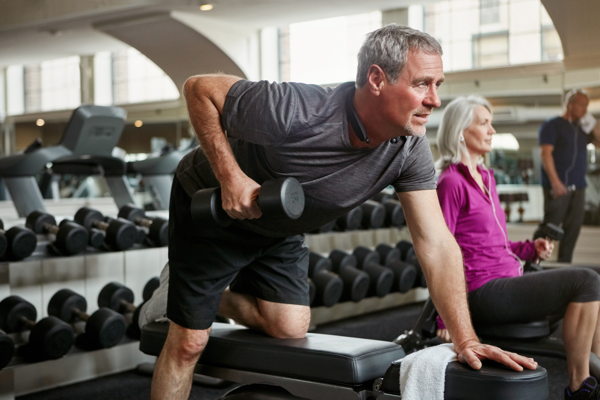
7 inapparent benefits of regular physical activity
It is common knowledge that sport improves overall physical condition and can help lose weight and achieve a slimmer body. However, these are not the only benefits of regular physical activity. It also has a positive effect on cognitive functions, improving concentration, memory, sleep, etc. Here are the benefits of sport that you may not have known about.
According to the latest MultiSport Index survey, 36% of Poles do not undertake any physical activity even once a month.[1] However, it is worth knowing that physical exercise, apart from influencing external appearance, is also important in many other aspects of life. Here are 7 inapparent benefits of regular exercise.
1. A natural method to improve immunity
Sport is not only a form of recreation, but also the key to strengthening the immune system. As indicated by the MultiSport Index, one in four Poles who engage in physical activity do it mainly for preventive purposes.[2] Physical exercise increases the production of lymphocytes and macrophages that absorb pathogenic microorganisms, and a strengthened immune system helps prevent infections and diseases.
2. Better sleep
Regular physical activity has a positive effect on the quality of sleep. Research conducted by the National Sleep Foundation has shown that it regulates the circadian cycle, making it easier for us to fall asleep and sleep deeper.[3] The body wakes up more regenerated and we have more energy to perform everyday activities. However, it is important to choose the right time of day to exercise. Training right before bed may make it difficult to fall asleep faster.
3. A way to improve digestion
The numerous benefits attributed to regular physical activity also include improving the functioning of the digestive system. Physical exercise contributes to better blood supply to the digestive tract, which improves intestinal function, prevents constipation, and reduces the occurrence of diseases, including stomach and colon cancer. When we exercise, we must remember to properly hydrate. To avoid digestive discomfort, adults should drink at least 1.5 litres of water a day.[4]
4. An irreplaceable remedy for stress
Currently, 90% of professionally active Poles declare that they feel stress at work, of which 28% admit that they are stressed every day or almost every day. This is often accompanied by unpleasant consequences, such as increased heart rate or increased blood pressure. It turns out, however, that the best way to relieve stress in the eyes of Poles is physical activity, as indicated by nearly 60% of them.[5] Exercise definitely beats passive forms of relaxation, such as using streaming platforms. – Physical activity brings balance to the nervous system. It changes the type of stimuli reaching our eyes. It increases blood flow not only through the muscles forced to work, but also through the microscopic blood vessels in the brain. Unlike resting in front of the TV, it is a real regeneration for the tired nervous system – comments Dr. Iwona Piątkowska, PhD in physical culture in the field of biomedical sciences, quoted in the MultiSport Index report.
5. Improved learning
Research by scientists from the University of Sydney and the University of Manchester has shown that physical activity contributes to achieving better academic results and reducing absenteeism from school.[6] Children who participate in team sports also perform better in terms of attention and working memory. – Exercise causes the density of neural connections between the cells that make up the hippocampi, i.e. brain areas that are crucial for memory and at the same time the areas that are the first to degenerate in Alzheimer’s disease. Regular physical activity is therefore a way to maintain long-term intellectual fitness and independence – emphasises Dr. Iwona Piątkowska in the MultiSport Index report.
6. Enhanced concentration and memory
Research shows that regular training, especially aerobic workouts, has a beneficial effect on memory and concentration.[7] Even moderate exercise, such as taking about 4,000 steps a day, can have positive effects on the brain.[8] People who exercise regularly have greater volume of the frontal lobe, which is responsible for planning, thinking, remembering and decision-making. This is important not only in the ageing process, but also in the assessment and control of emotions.
7. Joint exercise, stronger bonds
The influence of physical activity on shaping social bonds is also undeniable. When practising sports, people learn to work in a team and make joint decisions, which can be invaluable both in social and professional life. Researchers from California State University and the Children’s Hospital of Eastern Ontario Research Institute indicate that participating in team sports can reduce the risk of social problems by up to 17%.[9]
Physical activity is therefore essential for health and proper functioning. We don’t have to do the most advanced exercises right away. We just need to start with small steps. A solution that offers the opportunity to try new activities and select the most appropriate one are often sports cards offered by employers, which provide access to many sports and recreation facilities as part of one benefit. According to a survey conducted by Benefit Systems among users of the popular MultiSport card, almost 90% of them confirm that the frequency or variety of their exercises has increased since they got it.[10]
Sources:
[1] [2] [5] MultiSport Index 2023
[3] https://www.thensf.org/get-moving-to-get-better-sleep/
[4] https://pacjent.gov.pl/aktualnosc/pij-wiecej-wody
[6] Owen, K. B., Foley, B. C., Smith, B. J., Manera, K. E., Corbett, L., Lim, M., Phongsavan, P., Qualter, P., Ding, D., & Clare, P. J. (2024). Sport Participation for Academic Success: Evidence From the Longitudinal Study of Australian Children. Journal of Physical Activity and Health, 21(3), 238-246. Retrieved Apr 19, 2024, from https://doi.org/10.1123/jpah.2023-0506
[7] [8] Raji, Cyrus A. et al. ‘Exercise-Related Physical Activity Relates to Brain Volumes in 10,125 Individuals’. 1 Jan. 2024 : 829 – 839.
[9] Hoffmann MD, Barnes JD, Tremblay MS, Guerrero MD (2022) Associations between organized sport participation and mental health difficulties: Data from over 11,000 US children and adolescents. PLoS ONE 17(6): e0268583. https://doi.org/10.1371/journal.pone.0268583
[10] Benefit Systems data based on a survey conducted among approx. 10,000 MultiSport card users.