Experiences connected with physical education classes and approach to exercises in childhood influence activity in adult life
According to the MultiSport Index 2024: Sportcrastination report, lack of engagement during physical education classes has negative consequences in adult life. As many as 20% of adult Poles declare that they did not like PE classes, and 40% among those do not engage in any physical activity today, even occasionally. Children’s physical activity is not just a matter of school. The patterns learned at home or in extracurricular sports activities are equally important and have a key impact on their future health habits and motivation for regular exercise in adulthood. In response to these challenges, the MultiSport Foundation is running a free Active MultiSport Schools programme in primary schools. Recruitment for the 2025/2026 school year has already started.
The Global Matrix 4.0 report shows that only 16.8% of children and adolescents in Poland undertake physical activity lasting at least 60 minutes recommended by the World Health Organisation every day. According to the WHO, such low levels of physical activity are associated with poorer heart and metabolic health, reduced sleep time and poorer social functioning.
What is particularly worrying is that the lack of regular activity and appropriate motor development significantly hinders the formation of lasting, positive habits that children will continue into adulthood, so important for health and quality of life at a later stage.
PE classes can inspire
Physical education classes play a fundamental role in shaping children’s attitudes towards physical activity. Among physically active adults who remember PE classes with pleasure, over 70% exercise at least once a week. In turn, among people for whom sports activities at school were an unpleasant obligation, only 20% are now active at least once a week.
– Physical education classes have enormous potential to not only improve children’s physical condition, but also to awaken their passion for exercise and instil healthy habits that will accompany them throughout their lives. Properly planned and conducted activities help develop social skills, such as cooperation and coping with difficulties. On the other hand, poorly conducted classes can have the opposite effect – discourage physical activity, lower self-confidence and affect the perceived value of children in the context of sports, which may negatively affect their future physical activity – says Dr. Ewa Niedzielska, an expert at the MultiSport Foundation.
What do children expect from PE classes?
As part of the Active MultiSport Schools programme, the MultiSport Foundation conducts a dialogue with children and parents, paying particular attention to their needs related to physical activity and physical education lessons.
– Research shows that an important element of PE classes from the children’s perspective is their diversity, matching the level and type of activity to their abilities, as well as the attitude and predisposition of the teacher, from whom they expect a motivating attitude and interesting ideas – emphasises Dr. Ewa Niedzielska.
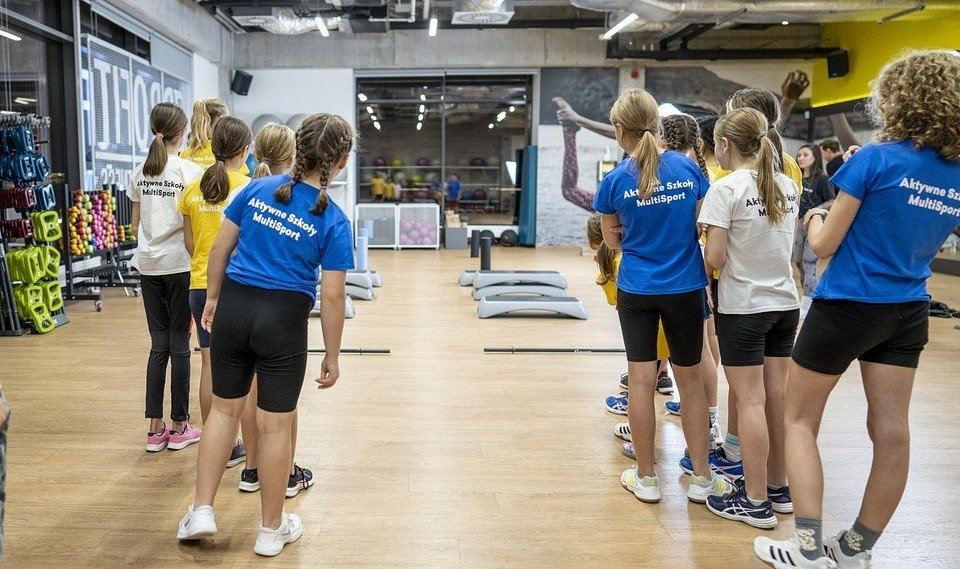
These needs are met within specific programmes by the MultiSport Foundation, which cooperates with experts, the school community and parents. The aim of Active MultiSport Schools is to encourage children to play sports regularly and show them its other dimensions, which is why PE classes have been expanded to include visits to fitness clubs. During such classes, children can learn about various activities tailored to their skills and capabilities under the supervision of sports trainers who, in a professional environment, use sports accessories and equipment. The programme provides access to various training modules, from functional classes, through exercises improving coordination, to body & mind activities such as yoga, healthy spine or Pilates.
The evaluation of the programme shows that children participating in it have become more physically active, are more willing to take part in PE classes and are more committed to various forms of activity. This is confirmed by teachers, coaches and parents: as many as 63% of them noticed that thanks to the programme their children started moving more, and three out of five students found the activities more interesting than traditional PE classes.
Sports facilities and the involvement of loved ones encourage activity
Children’s physical activity is not only shaped at school. Patterns learned at home and access to valuable forms of exercise, such as sports classes conducted by trainers in dedicated facilities, are equally important. According to the results of the MultiSport Index 2024: Sportcrastination report, 45% of Poles trained regularly in a club or with a trainer as children. This group is more likely to remain active in adulthood. In turn, among people who did not have the opportunity to participate in professional extracurricular activities (49%), as many as 65% declare that they are not perceived as physically active people.
– Showing children different dimensions of activity – including those outside of school – can be a significant change. Training using equipment and the possibilities of sports facilities gives children a new, different perspective. But that’s not all. Children learn largely through imitation, which is why the role models they observe at home are extremely important – emphasises Dr. Ewa Niedzielska.
43% of adult Poles declare that their families practised sports. Importantly, people who grew up in an active environment are much more likely to exercise regularly today. According to the MultiSport Index 2024 report, in the most active group – those who spend more than three hours a week being active – as many as 58% were raised in homes where physical activity was a daily occurrence.
New year, new energy – recruitment for the next edition of Active MultiSport Schools programme is underway
The current edition of the Active MultiSport Schools programme involves 77 primary schools from 12 voivodeships: Masovian, Łódź, Greater Poland, Pomeranian, Kuyavian-Pomeranian, Silesian, Lesser Poland, Lublin, Lower Silesian, Lubusz, West Pomeranian and Świętokrzyskie. These are schools located both in large cities such as Warsaw, Łódź, Poznań and Gdańsk, and in smaller towns such as Stargard and Pruszków. There is currently open recruitment for the new edition of the programme for the 2025/2026 school year. Registration is carried out using the form available on the MultiSport Foundation website. More information about the programme can be found at https://fundacjamultisport.pl/nasze-programy/aktywne-szkoly-multisport/.

Marcin Walendziak
About the MultiSport Foundation: The MultiSport Foundation, established by Benefit Systems in 2021, actively fights against hypokinesia, i.e. motor immobility, which the World Health Organisation considers one of the key threats to modern civilisation. The MultiSport Foundation’s activities constitute a comprehensive response to the challenges related to the lack of physical activity in various age groups. Its flagship programme is the Active MultiSport Schools, addressed to students between 12 and 19 years of age. As part of this programme, qualified trainers and instructors conduct sports classes for children and youth in modern fitness clubs, including the ZDROFIT network. The foundation also implements the “MultiSport classes with elements of corrective and compensatory gymnastics” programme,” focusing on the prevention of posture defects among children and the “Senior in good shape” programme, the aim of which is to activate physical activity and combat the feeling of loneliness among seniors through sports integration.