New school year without PE exemption? How does physical activity affect students’ health and productivity
According to the Global Matrix 4.0 report, currently less than 20% of children and adolescents are physically active enough. Moreover, as much as 30% of students take a sick leave not to participate in PE classes. Meanwhile, exercise is an integral element of development and a key factor influencing children’s health and wellbeing. With the beginning of a new school year, it is worth remembering that a child’s brain, oxygenated during physical activity, works better, which contributes to greater concentration and academic success.
Children have a natural need for movement, which determines their proper psychophysical development. According to WHO recommendations, people aged 5–17 should be active for at least 60 minutes every day, engaging in moderate to intense exercise. Following these guidelines results in better health and cognitive development of the child, which translates into better academic results or improved concentration.
Physical exercise supports the development of the human body, has a positive effect on the mental health and circulatory-respiratory system of a young person, and reduces the risk of injuries. Additionally, it is also a basic factor influencing muscle strength and tension, the development of the skeletal and ligament system and the correct human posture. Unfortunately, the proportions between the time spent on spontaneous physical activity and the time spent using technology (including a TV, laptop, tablet, or phone) increasingly predominate in favour of spending time passively. Among younger generations, an additional contribution is made by school where children spend long hours sitting at desks, often not paying attention to the proper alignment of their spines.
Bad habits related to sitting for many hours or carrying a heavy backpack, combined with low physical activity, cause more and more children to have problems with incorrect muscle tension, which makes them unable to maintain correct body posture. The consequence is numerous posture defects. Meanwhile, research shows that in the case of children with a higher level of physical activity they occur less frequently than among their peers with an average and low level of physical activity.
– Foot deformities, including flat feet, spine problems (e.g. slouching or scoliosis) and incorrect positioning of the knee joints (e.g. valgus) are increasingly observed among children. Meanwhile, physical activity is becoming a key tool in the prevention and correction of posture defects. In response to these challenges, as the MultiSport Foundation, we decided to create “MultiSport Classes” containing elements of corrective and compensatory gymnastics, adapted to the age and psychomotor abilities of children. They are conducted by qualified trainers, instructors, and physiotherapists in schools. The classes are diverse and based on elements of acrobatics, dance, tennis as well as team games and martial arts. Such attractive forms of exercise are intended to additionally encourage young people to take up physical activity – emphasises the President of the MultiSport Foundation, Dr Tomasz Półgrabski.
Physical activity also has a positive impact on the mental and emotional health of children. When exercising, endorphins, also called happiness hormones, are released. They improve mood and reduce stress. Children who regularly engage in physical activity show better concentration, have better memory and greater resistance to emotional problems.
Obesity among children – a pandemic of the 21st century
Lack of sufficient physical activity also contributes to another serious problem, which is obesity and overweight among the youngest Poles. Data from the Ministry of Health clearly show that Polish children are gaining weight the fastest in Europe. Currently, over 22% of students weigh too much, whereas in the 1970s the problem affected less than 10% of them. This applies to all children – from preschoolers to teenagers.
The consequences of obesity may include diseases of the circulatory system, e.g. hypertension or atherosclerosis, metabolic diseases (including diabetes) or respiratory diseases, e.g. asthma. The occurrence of diseases that until recently were associated mainly with adult age is increasingly observed in children. For example, the occurrence of type 2 diabetes has been growing among them since the 20th century.
Moreover, research shows that more than half of people suffering from obesity in childhood also show excessive body weight later in life. This is associated with numerous health problems, including glucose intolerance, type 2 diabetes, hypertension, and organ steatosis. According to the Organisation for Economic Co-operation and Development (OECD), many diseases caused by obesity will mean that Poles will live on average three years and 10 months shorter than if they followed a proper diet, maintained an appropriate body weight, and engaged in physical activity. Currently, in Poland, obesity causes approximately 1.5 million hospitalisations per year, and the epidemic of overweight and obesity in children has become one of the most serious challenges for society in health, social and economic terms.
– Physical activity should be an integral part of a child’s everyday life. It may be walking, cycling or PE classes at school, during which, apart from exercising and playing, the child learns how to compete with others and develops self-confidence and determination. Experts agree that society’s problem with a sedentary lifestyle, diseases of affluence, and posture defects among children is serious and requires specific action. For many families, PE classes at school are often the only chance to introduce regular exercise to their children. Unfortunately, we are observing more and more cases of conscious resignation from sports by granting periodic exemptions from these classes. The social problem is so big that there have been announcements of legislative changes in this area in the public space and shifting the decision to exempt a child from PE classes to specialist doctors – emphasises Dr Tomasz Półgrabski.
Children need to be active
Experts unanimously recommend physical activity to everyone. They emphasise its role in the development of children and adolescents. In addition to reducing the risk of postural defects, obesity, overweight and other diseases of affluence, physical exercise increases the body’s resistance to infections and supports the functioning of the nervous system. WHO urges everyone, regardless of age, to limit the time spent sitting and replace it with physical activity, because exercise, even at low intensity, provides health benefits.
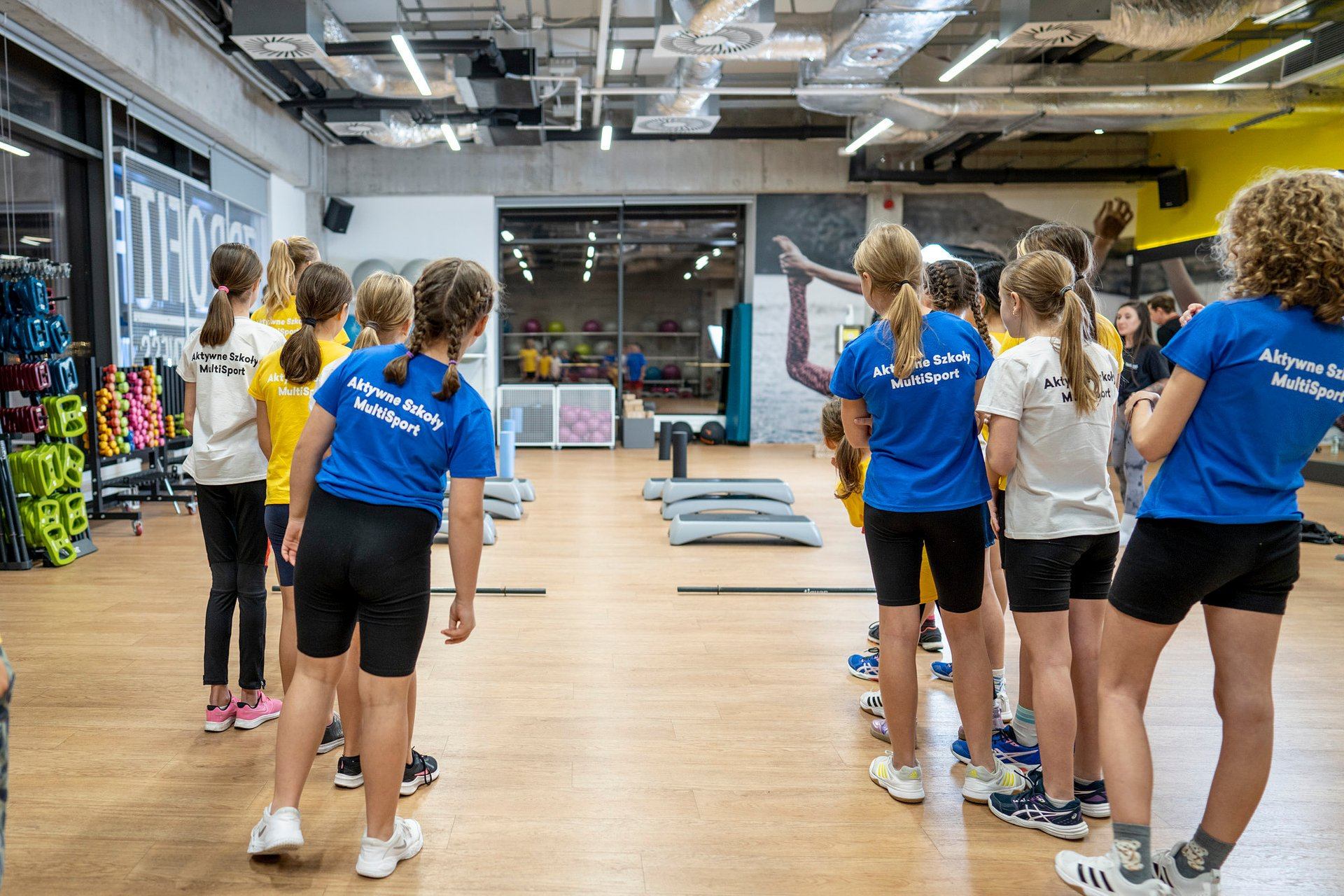
But how can we make children move more willingly and choose physical activity instead of smartphones? According to Dr Tomasz Półgrabski, it is crucial to modernise the formula of traditional sports activities, adapting them to today’s times. An example is the “Active MultiSport Schools” programme addressed to students between 12 and 19 years of age. As part of its agenda, sports classes for children and teenagers are conducted under the supervision of professional trainers and instructors in fitness clubs belonging to Benefit Systems.
– At “Active MultiSport Schools” we focus on a modern formula of sports activities for children. There are four modules of alternative PE classes to choose from, i.e. cross, body & mind, dance classes and classes developing eye-hand coordination. All of them are carried out using professional sports equipment from fitness clubs. The programme is intended to support the youngest in building healthy habits for years, which in the long term will pay off in the form of a better psychophysical condition of society, translating into reduction of diseases of affluence – adds Dr Tomasz Półgrabski.

Only in the first half of 2023, nearly 1,500 hours of training were carried out for over 2,500 children from several schools as part of the “Active MultiSport Schools” programme. Plans for the 2023/2024 school year include expanding the programme to include additional institutions in the country.
Sandra Dobrowolska
797 294 243
Źródła:
Raport Global Matrix 4.0[1] https://samorzad.pap.pl/kategoria/edukacja/minister-sportu-30-proc-polskich-dzieci-korzysta-ze-zwolnien-lekarskich-z-wf-cos[1] https://ncez.pzh.gov.pl/aktywnosc-fizyczna/wplyw-aktywnosci-fizycznej-na-wyniki-w-nauce/
https://samorzad.pap.pl/kategoria/edukacja/minister-sportu-30-proc-polskich-dzieci-korzysta-ze-zwolnien-lekarskich-z-wf-cos
https://ncez.pzh.gov.pl/aktywnosc-fizyczna/wplyw-aktywnosci-fizycznej-na-wyniki-w-nauce/
Kleszyk K., Sobera M., Kuc K: Aktywność fizyczna dzieci w wieku 9–10 lat a wady postawy w obrębie tułowia, AWF Wrocław 2017, 58, 12-21.
Nazim J., Starzyk J.: Otyłość w wieku rozwojowym a cukrzyca, „Przegl. Lek.”, nr 66(1-2)/2009, s. 96-99.
Otyłość dzieci i młodzieży poważnym problemem globalnym, Główny Inspektor Sanitarny, <https://www.gov.pl/web/gis/otylosc-dzieci-i-mlodziezy-powaznym-problemem-globalnym>
Raport Organizacji Współpracy Gospodarczej i Rozwoju (OECD), Health at a Glance 2019 <https://www.oecd-ilibrary.org/sites/010c22fe-en/index.html?itemId=/content/component/010c22fe-en>
Wytyczne WHO dotyczące aktywności fizycznej i siedzącego trybu życia, 2020