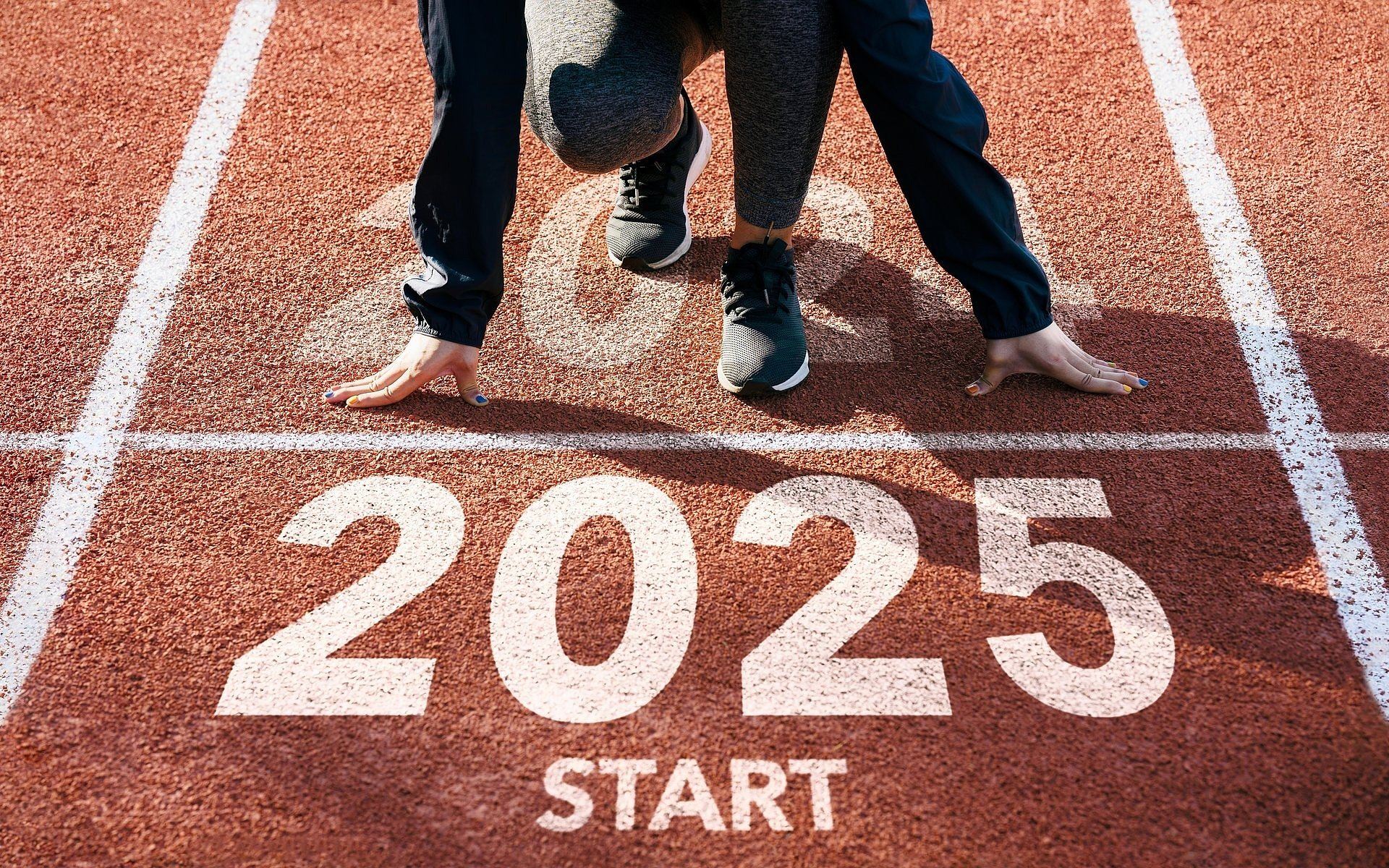
Not-so-new New Year’s resolutions. How to build the habit of regular physical activity for good?
According to a survey conducted by SW Research on behalf of Benefit Systems, starting or increasing physical activity is one of our most popular New Year’s resolutions. However, one in four Poles admit that they did not manage to stick to the resolutions made last year. What makes it so difficult to implement them and how to increase our chances of success? Practical tips on getting used to physical activity and implementing plans in this area are shared by experts of the “Sportcrastination” educational campaign.
Healthy top
According to the “New Year’s Resolutions of Poles” research report prepared by SW Research on behalf of Benefit Systems, at the turn of 2024 and 2025 half of us plan to make New Year’s resolutions but only one in five (21%) have already defined them. Most often they are related to broadly understood health. Most indications (47%) refer to concern for physical health, followed by starting or increasing physical activity (37%), and taking care of mental health (29%). The top of our resolutions for next year remain like those for the year that is coming to an end. Will 2025 be better in terms of achieving the undertaken goals? One in four Poles admit that in the past year they did not manage to stick to their resolutions and 12% say that “nothing came out of it”.[1]The results of the MultiSport Index 2024: Sportcrastination report, which examines the physical activity of Poles, show that among 64% of exercisers, almost one in three admit that they have problems with maintaining a constant level of motivation.[2]Why, being aware of the benefits of activity, do we sportcrastinate, postponing being active?
Seemingly a vicious circle
One in three Poles do not undertake any physical activity during a month. Respondents most often explain it by lack of time (28%) and illness (26%). Our time is mainly taken up by work (62%), childcare (16%) and household chores (16%). Nearly one in ten inactive Poles admit that they do not exercise because they simply do not feel like it.[3]
– At the beginning of building any habit, the strength of motivation and internal dialogue are key. When we see only obstacles around us, we have a full list of excuses and low self-esteem causing shame, then it will be very difficult for us to stick to our resolution. The brain will only perceive activity as unrewarding effort. We must constantly reassure ourselves that these benefits will come if we give it a chance – says Dr. Ewa Hartman, trainer and MBA lecturer.
Successful implementation of the resolution is possible, regardless of loss of motivation or the feeling that one has never been very active. This is confirmed by the existence of a group of respondents included in this year’s MultiSport Index report: 33% of physically active people currently practise sports once or twice a week, although they admit that they sometimes encounter internal difficulties and do not have positive experiences with PE in childhood.[3]
Find your “why”
– Think about when you feel better and you will probably decide that it’s not only sleep or good food, but also exercise, e.g. walking. Finding your “why” will also be helpful. Ask yourself: why do I want to start exercising? – suggests Dr. Ewa Hartman.
The most frequently indicated reasons for practising physical activity among exercising Poles include health prevention, pleasure and relaxation. Four out of ten active respondents declare that they decide to practise sports for these reasons. The vast majority of those who practise sports enjoy it.[4]
– Active people know that by exercising they will feel better. Dopamine plays a huge role here. When the brain remembers that training brings specific benefits, it will be our ally in continuing our adventure with activity. From a certain point, the passion for it will fuel itself. However, it is important to find a discipline that we like – explains Dr. Ewa Hartman.
The principle of a self-reinforcing circle of activity is confirmed by data showing an increase in the frequency of exercise among people who are already active and exercise at least three times a week from 30% in 2017 to 36% in 2024.[5]However, the percentage of inactive people has not changed much. One of three Poles still do not undertake any activity during the month. Where to start?
Minimum plan for the start
– Beginners should start with low-intensity training. Undertaking too intense an effort at the beginning not only guarantees delayed muscle pain (so-called soreness), but also associates activity with a sense of pressure and obligation. And for it to become a permanent part of our lives, it should be tailored to us and associated with pleasure. To make our plans come true, we should replace “I have to” with “I want to” – says Piotr Czyżewski, Wellbeing Strategy Manager at Benefit Systems, sports trainer and breathing instructor.
Among physically active Poles, the most popular disciplines are those with a low entry barrier: cycling (44%), running (32%) and classes at the gym or fitness club (24%).[6]These are accessible disciplines that can be practised in many locations and do not require advanced skills or expensive equipment.
– The amount of time, energy and financial resources devoted to practising a given discipline should be proportional to the benefits and adequate to the possibilities. Otherwise, our frustration will grow, and we'll quickly start finding excuses not to exercise. If this irritates us, do not insist on the facility located far away or do not search the Internet for specific clothing or equipment. Let's just start with what we want and what possibilities we have, right here, right now. Let’s try different activities. The more of them we get to know, the greater the chance that we will like one of them for a long time. Each subsequent one will also be easier for us to learn, because as the range of motor skills increases, the ability to learn new disciplines grows as well – says Piotr Czyżewski.
The positive effects of easier access to sports facilities and the possibility of testing various forms of activity are confirmed by data regarding MultiSport card users. The level of physical activity among MultiSport card holders in Poland (1.5 million users) is 94%, while in society – 66%. In addition, as many as 79% of them devote their free time to physical activity, while only 43% of the entire population do so.[7]
The sports profile of Generation Z representatives also proves that juggling disciplines translates into being active. Practising on average over 2.5 disciplines, they are distinguished by the highest level of activity. In addition to running (51%), cycling (41%) and swimming (33%), they also often choose training at the gym (32%). For 17% of respondents, it is the leading discipline[8].
– The popularity of gyms among Generation Z representatives does not mean that they are reserved only for younger people. At the beginning of our adventure with this type of facilities, it is worth taking someone close with us and starting with the simplest devices, such as an elliptical trainer or a treadmill. We should also not be afraid of strength training machines and remember that we can always use the support of a trainer. Beginners often think they are being judged by them. This is a wrong assumption. For a trainer the most important thing is to help someone, and the novice’s progress gives them the greatest satisfaction because the results are visible very quickly – says Piotr Czyżewski.
Nearly half of people making New Year’s resolutions would like to use support in achieving them, e.g. in the form of courses, assistance from an expert or trainer.[9]To persevere in our decision, it is worth having allies, so as part of the educational campaign of the MultiSport Programme, a range of expert-developed materials are available at www.sportkrastynacja.pl. Soon, a video guide in which Dr. Ewa Hartman briefly and accurately debunks the myths of the seemingly closed circle of sportcrastination will be accompanied by a video that will familiarise everyone with the space of the gym and fitness club. The MultiSport Index 2024: Sportcrastination report can be downloaded HERE.
[1] “New Year’s Resolutions of Poles” research report prepared by SW Research on behalf of Benefit Systems, December 2024, [2] MultiSport Index 2024: Sportcrastination report, [3],[4],[5],[6],[7],[8] Ibidem, [9] “New Year’s Resolutions of Poles” research report prepared by SW Research on behalf of Benefit Systems, December 2024