One in three Poles do not exercise at all. Why do we postpone physical activity until later?
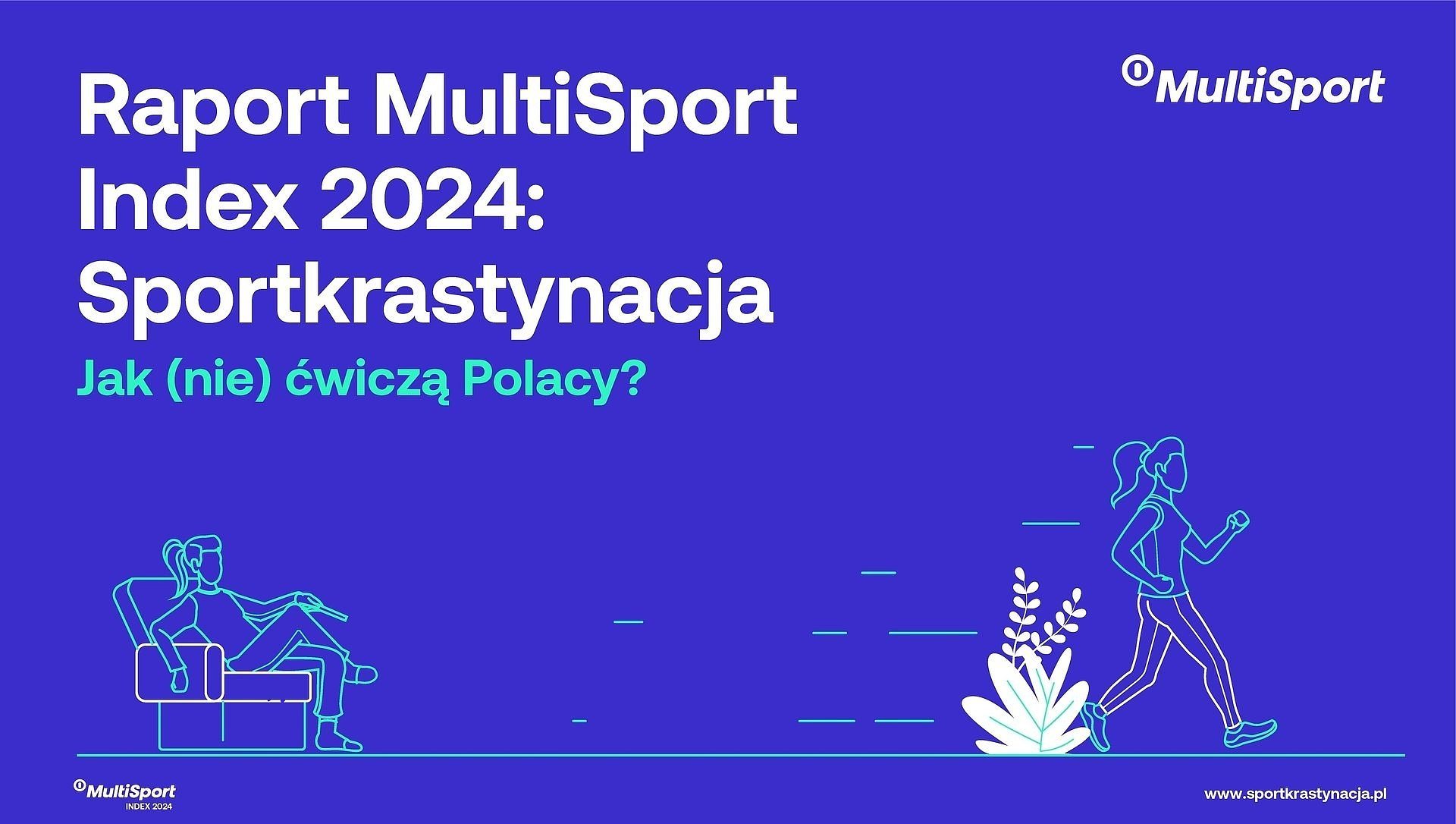
The approaching end of the year is a time to sum up and make new plans, including those regarding more frequent physical activity. Among 64% of exercisers, almost one out of three admit that they have problems with maintaining a constant level of motivation. In turn, according to the latest MultiSport Index 2024: Sportcrastination report, which diagnoses the social tendency to postpone sport until later and presents practical ways to change it, one in three Poles are not physically active at all.
One out of five respondents from the group of people who are active at least from time to time only exercise in selected periods, and one in three do it incidentally, when they have the so-called “spurts”.[1]The irregularity of exercise observed in the research results suggests that the motivation to practice sports in Polish society is short-term. Activity often occurs seasonally or under the influence of momentary stimuli, which makes it difficult to build a healthy habit and lead an active lifestyle.
– By sharing an in-depth analysis of Poles’ physical activity on the eve of New Year’s resolutions, we encourage everyone to start their adventure with exercise today and not postpone it until tomorrow, the next week, or the new year. In the seventh edition of the MultiSport Index report, we focus on the phenomenon we call sportcrastination. This is a new word whose meaning we know well. It combines procrastination with sports and means voluntary postponement of activity, while knowing that such an approach means numerous health consequences in the future – says Emilia Rogalewicz, Management Board Member at Benefit Systems.
How Poles (don’t) exercise
According to the research results presented in the MultiSport Index 2024: Sportcrastination report, one in three Poles do not undertake any form of exercise, including walking or cycling. Inactive Poles most often explain it by lack of time (28%) caused by work (62%), childcare (16%) and household duties (16%). One in ten respondents from this group state that they “just don’t feel like it”.[2]In turn, the “Work-life Balance” report of the Polish Economic Institute shows that Poland is one of the European Union countries with the worst balance between professional and private life, which further discourages people from “moving”.[3]
– We should remember that without exercise we will feel worse and worse, because it is impossible to effectively regain energy without physical activity. Mental exhaustion caused by tedious mental work is reflected in physical fatigue. How to overcome it? By being physically active. For energy recovery, just shaking the body will be a plus. Exercise always makes sense – says Dr. Ewa Hartman, trainer and MBA lecturer.
People from Generation X (born in 1965–1980) and baby boomers (born in 1946–1964) are performing worst. Respectively, 42% and 57%[4]representatives of these groups do not undertake any physical activity even once a month, which puts them in a particularly difficult health situation. The number of chronic diseases increases in these age groups.
The activity of Poles and WHO standards
The World Health Organisation (WHO) recommends moderate physical activity involving various muscle groups for at least 2.5 hours a week. World statistics show that as many as 30% of the adult population (1.8 billion) do not reach the recommended level of activity. Against this background, Poles do well: 43% of us exercise less than three hours a week, while 33% exercise more than three hours a week[5].
– Poland, although statistically better than the global average, must intensify preventive activities to avoid the mistakes of other countries struggling with the health crisis. Diseases related to a sedentary lifestyle, such as heart disease, atherosclerosis, hypertension, diabetes and obesity, generate huge costs for the health care system. Regular physical activity should become an integral element of everyday life, which requires both education and support in maintaining healthy habits – says Prof. Ernest Kuchar, expert in sports medicine and infectious diseases from the Medical University of Warsaw.
The UN estimates that between 2020 and 2030, the global cost of the long-term effects of too little physical activity could reach USD 300 billion.[6]
Ready, steady, go!
The MultiSport Index 2024: Sportcrastination report presents the results of two quantitative studies and a qualitative study carried out on behalf of Benefit Systems by Minds&Roses and IRCenter research companies. The following experts from the world of science, medicine and sport were invited to comment on the data, as well as share their personal reflections on sportcrastination and practical tips to combat it: Dr. Joanna Wojsiat, Prof. Ernest Kuchar, Dr. Joanna Gutral, Dr. Ewa Hartman, Dr. Damian Parol and Mateusz Kusznierewicz. The publication is part of the “Sportcrastination” educational campaign initiated by Benefit Systems, which has been facilitating access to various activities under the MultiSport Programme for over 20 years. The extensive activities aim to familiarise people with exercise and show them that there is no need to be afraid of it, but that it can be easily incorporated into everyday duties. Due to the fundamental importance of the power of motivation for the implementation of intended activities, the campaign includes an 8-episode video guide in which Dr. Ewa Hartman responds to specific concerns of Poles resulting from research. The guide, as well as infographics and other educational materials created by experts are available to everyone at www.sportkrastynacja.pl.
The MultiSport Index 2024: Sportcrastination report can be downloaded
The MultiSport Index 2024: Sportcrastination report quotes the following research: 1)Minds&Roses survey commissioned by Benefit Systems, 07.2024. MultiSport Index 2024. CATI quantitative survey conducted on a representative random nationwide sample of N=1,400 Poles aged 18+. 2) IRCenter survey commissioned by Benefit Systems, 07.2024, Reasons for practising and not practising sports by Poles. Qualitative research carried out in three locations, 15 (IDI) and 5 (FGI) with people with varying degrees of involvement in physical activity 3) IRCenter survey commissioned by Benefit Systems, 08.2024, Reasons for practising and not practising sports by Poles. CAWI quantitative survey conducted on a representative nationwide sample of N=1006 Poles
[1] MultiSport Index 2024: Sportcrastination report, [2] Ibidem [3] https://pie.net.pl/wp-content/uploads/2024/04/PIE-Raport_work-life-balance_2024.pdf, [4], [5] Ibidem, [6] https://www.who.int/news-room/fact-sheets/detail/physical-activity