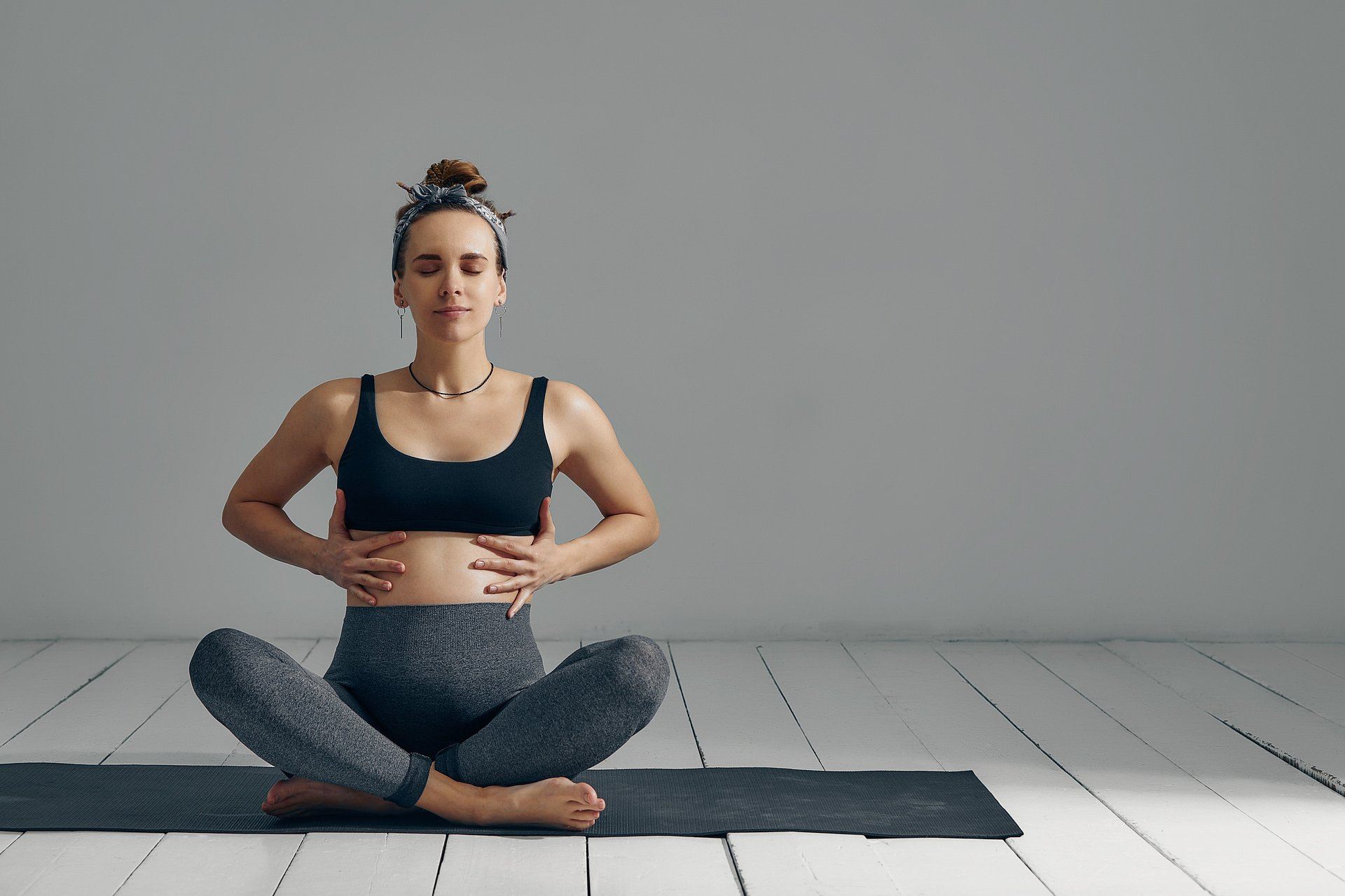
Physical activity supports women’s health
Did you know that physical activity can be the answer to women’s health problems? Painful menstruation, urinary incontinence or other urogynecological problems related to the incorrect functioning of the pelvic floor muscles may affect up to 69% of women of different ages.[1] The lifestyle has a significant impact on their occurrence. As experts emphasise, physical activity is an effective prevention method and remedy for some female ailments. What activity should women choose? Which exercises will be most helpful? Here are some tips from a physical therapist.
The most common problem connected with weakening pelvic floor muscles is urinary incontinence. According to statistics, about 423 million people worldwide struggle with this ailment of which 72% are women (303 million).[2]
– The scale of urogynecological problems is still increasing and knowledge about them is still not very common. We usually associate urogynecological ailments with urinary incontinence and we often believe the reason behind them is natural childbirth or simply advanced age. This is true, albeit in a simplified way. Urogynecological problems also include painful menstruation, discomfort during intercourse and even back pain. As in the case of urinary incontinence, all these ailments may be associated with weakening or excessive tension in the pelvic floor muscles, meaning the Kegel muscles, whose condition depends not only on pregnancy or childbirth but also on our lifestyle. Moreover, these problems concern people of all ages. For example, stress urinary incontinence is a condition that one in four women aged 18 to 49 struggle with. As many as 18% of women before the age of 29 experience the first symptoms of this condition[3] – explains Andrzej Kępczyński, physiotherapy expert at Zdrofit Zdrowe Miejsce.
Pregnant and postpartum women, women with abdominal obesity who lead a sedentary, inactive lifestyle and menopausal women are particularly exposed to ailments related to the weakening of the pelvic floor muscles.
– The topic of urogynecological problems is the most common among women who are pregnant or have already given birth. Pregnancy or natural childbirth are physiological moments in a woman’s life that put an exceptional strain on the pelvic floor muscles and can cause further health problems such as urinary incontinence – emphasises Andrzej Kępczyński. – An inactive lifestyle is also relevant for urogynecological problems as prolonged sitting causes the muscles of the lower body to stop working and weaken which can be easily checked. We just need to strain the muscles of the buttocks while sitting. If we succeed, we will quickly find out that we are not able to maintain the tension for a long time. The sitting position prevents the gluteal muscles from working and it is them that are largely responsible for the correct position of our body. When the gluteal muscles are too weak, their functions are taken over by other muscles that were not designed for it. The position of our body also changes. If we do not maintain the correct posture, our body begins to function differently – the diaphragm works differently, the internal organs move differently when we breathe and consequently the work of other muscles, including those located in the pelvic floor, is disturbed – explains the expert.
According to the latest MultiSport Index 2022 survey, 52% of Polish women spend more than five hours in a sitting position each day. This may contribute to the emergence or worsening of some health ailments.
Interestingly, the pelvic floor muscles are also disturbed by... sitting on the toilet. – It may seem shocking to many people, but according to our physiology we should do our business squatting, not sitting. Therefore, when visiting the toilet, it is worth placing a low stool under our feet to change the angle of the legs in relation to the torso from a straight angle to an acute angle, which is much healthier for our pelvic floor muscles – adds the expert.
Choose prevention
Everyone can exercise their pelvic floor muscle, regardless of gender or age. – The earlier we start training our pelvic floor muscles, the better condition they will be as the years go by. It should be remembered that pelvic floor muscle exercises involve combining the work of the pelvic floor with strengthening the muscles of the back, abdomen, hips, and thighs. The key to success is rebuilding weakened deep muscles, improving body posture and proper breathing – suggests Andrzej Kępczyński.
Appropriate exercises supporting the proper functioning of pelvic floor muscles, conducted under the supervision of specialists, are also recommended for women planning pregnancy or preparing for childbirth.
Exercise under the supervision of a specialist
Our pelvic floor muscles cannot be seen, so we must feel them. The help of urogynecological physiotherapists is invaluable here as they will not only professionally assess the condition of the pelvic floor muscles, determining whether they are weakened or overly tense, but also check if the patient has additional problems that should be considered in the exercise process, for example blocked diaphragm, incorrect posture, etc. – Female patients often have problems locating their pelvic floor muscles, they cannot feel them, and they are not sure if they are doing the exercises well. A urogynecological physiotherapist will suggest appropriate exercises and teach them how to tighten or relax muscles properly – emphasises Andrzej Kępczyński.
Proper selection of exercises is especially important. To this day, you can find a lot of tips and techniques on the Internet that will not be good for the pelvic floor muscles.– One of the ways to allegedly strengthen the pelvic floor muscles, which has been circulating on the Internet for years, was exercise consisting in interrupting the urine stream. This is very harmful and can lead to a disturbance of the physiological process. Forcing yourself to urinate in advance, before leaving the house is just as harmful to the pelvic floor muscles – warns the expert.
Today, the professional help of a urogynecological physiotherapist can be obtained in fitness clubs, for example as part of specially designed group fitness classes or individual consultations. Such classes are already being offered by selected fitness clubs throughout the country, including Zdrofit facilities operating in Warsaw, Fabryka Formy fitness clubs in Poznań and Katowice as well as My Fitness Place in Kraków and Fitness Academy in Wrocław.
– During such classes qualified physical therapists teach women how to maintain the correct body position and explain breathing techniques. They also perform specialised exercises to strengthen, stretch or improve the stability of the pelvic floor muscle tone. It is also worth taking advantage of individual consultations as part of which a physiotherapist will examine and recommend an individual set of exercises to help alleviate ailments, prevent their formation, or improve the comfort of practising our favourite sports discipline – sums up Andrzej Kępczyński.
Among the many benefits of caring for pelvic floor health there are also less obvious ones, such as greater satisfaction and sexual performance.More information on fitness classes conducted by physiotherapists can be found at https://zdrofitzdrowemiejsce.pl/aktualnosci/nowe-zajecia-z-fizjoterapeuta
[1] https://www.pturol.org.pl/Image/files/Guidelines%20ZASADY.pdf
[2] Dno Miednicy. Fizjologia, patologia i leczenie [Pelvic floor. Physiology, pathology and treatment], R.Tanzberger, A.Kuhn, G.Mobs, U.Baumgartner, EDRA Urban&Partner
[3] Epidemiologia i leczenie nietrzymania moczu oraz obniżenia narządów miednicy u kobiet [Epidemiology and treatment of urinary incontinence and the lowering pelvic organs in women], A. Starczewik, A. Brodawska, J. Brodawski, Pol Merk Lek. 2008, XXV; 145: 74