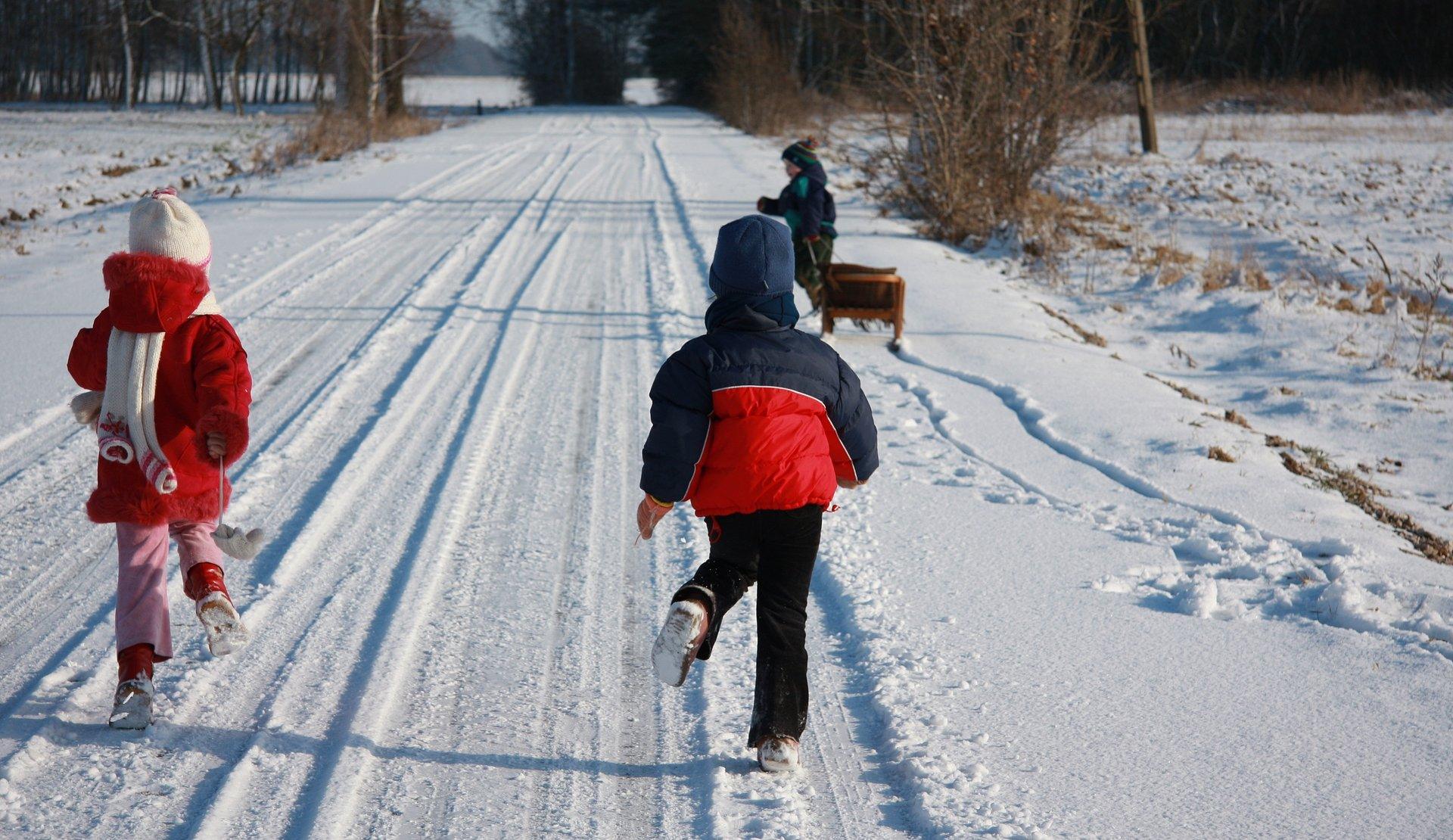
Winter is in full swing and the holidays are underway. It’s worth reminding children about some safety rules.
The winter weather does not leave the country. In many regions, snow remains on the ground and water bodies are covered with a layer of ice. According to current forecasts, this situation will not change any time soon. Winter break will last until 1 March, so in the coming weeks children will be spending more time outdoors, enjoying the charms of winter. This is the moment when the risks typical of this time of year – icing, limited visibility and frozen waters – become particularly important. Experts and services are calling for regular reminders of the rules of safe behaviour to young children.
According to a MultiSport survey, 88% of parents of school-age children believe that the ideal holiday is one that provides children with plenty of opportunities for exercise and physical activity.
Ice
One of the most serious winter hazards are frozen lakes and ponds, which, despite years of warnings from authorities, still pose a temptation to have fun.
– Ice is never predictable, even if it looks stable. Its thickness changes from hour to hour, with flooding and cracks that are impossible to see from the shore. Every year we encounter situations where children treat a frozen body of water as a natural slide and this is when the most tragic incidents occur. Water bodies that are currently covered in ice can be found both in city parks and in the outskirts. Rivers are also frozen. They are all equally dangerous and the same absolute ban on entering the emerging ice applies to all of them – says Maciej Błasiak, president of the Volunteer Water Rescue Service.
Road
It’s not just bodies of water that are becoming dangerous. Difficult road conditions, icy pavements, and quickly falling darkness is a mix that requires caution.
Experts emphasise that children should know how to behave after a fall on an icy pavement or a serious crash on a sledging hill, which results in more serious injuries. They should be aware that the fast-falling darkness and slippery roads require not only greater caution from drivers but also from pedestrians. That is why it is so important to wear reflective elements, cross the road only in designated areas and step carefully.
– Most winter interventions involve seemingly ordinary situations that suddenly get out of control. A child runs across an icy road or slides down a sledge towards the street. This is not a matter of bad will but of lack of awareness. Safety rules in such situations are obvious from an adult perspective, but not from the perspective of a child who is still learning cause-and-effect thinking. That’s why it’s worth talking to children, teaching them appropriate behaviour, and showing them places that are safe for having winter fun – emphasises senior brigadier Karol Kierzkowski, spokesman for the Chief Commander of the State Fire Service.
How to talk to children about winter safety?
– It is not enough to give children a list of dangers and prohibitions. It is necessary to understand the mechanisms and strengthen cause-and-effect thinking. Children who know where threats come from make more informed decisions – suggests Ilona Gregorczyk, a sensory integration therapist and expert of the MultiBezpieczeństwo Programme created by the MultiSport Foundation.
To support parents and teachers in building safety awareness, the MultiSport Foundation has created a free, publicly available educational programme called MultiBezpieczeństwo. The programme offers seven safety “classes” including the latest winter educational materials in the form of curriculums, presentations, engaging game diagrams and puzzles that focus on explaining dangerous situations, developing cause-and-effect thinking and teaching children decision-making mechanisms. The materials created as part of the programme do not refer to bans, but through the prism of children’s experiences and explanations of specific processes, help them better understand dangerous situations and reinforce appropriate behaviour. Educational materials, developed for children aged 10–14, can be found at www.multibezpieczenstwo.pl.
The MultiBezpieczeństwo Programme has been operating in schools for over a year and is intensively used by teachers.
– 91% of teachers rated the programme as very useful in their daily work. They most often point to modules about winter, road traffic and home safety. They also emphasise that the materials can be used “step by step,” but they can also be composed into individual thematic blocks, for example by combining modules about water, nature and sports spaces. The fact that 11,479 students have participated in MultiBezpieczeństwo classes so far shows that the programme supports education not only practically, but also flexibly, even in areas that are less obvious and more difficult to explain – says Natalia Perlińska, spokeswoman for the MultiSport Foundation.
Teachers who conduct classes using the programme’s materials can receive a personalised certificate confirming the implementation of an innovative educational programme at school. The certificate is issued after completing a short evaluation form at: www.multibezpieczenstwo.pl/ewaluacja/.

Marcin Walendziak
The MultiSport Foundation is a non-profit organisation whose mission is to promote a healthy and active lifestyle among all social groups, with particular emphasis on children, youth, seniors and people with disabilities. The foundation implements educational and sports programs, such as “Active MultiSport School” and “Full of Sport,”, which engage tens of thousands of participants throughout Poland each year and support health prevention and social integration. The organisation collaborates with research centres, schools, athletes, and business partners, constantly developing programmes that respond to society’s current health challenges.